Health and life cover for companies — an independent written review
One contract. A team in six time zones.
Insuring a distributed team on a single policy is the right instinct and the details decide whether it works. Which underwriting basis you qualify for, whether a policy issued here is even lawful there, and what happens to someone the day they leave. We read those before you sign, and we tell you when your current programme is already fine.


Three things, and the middle one is where the money is.
The market competes on premium because premium is easy to compare. The terms are worth more, and almost nobody negotiates them.
What the programme actually says
We read the policy, not the brochure. Most benefits programmes are bought once and renewed by inertia, and the wording that decides a claim is rarely the wording anyone was shown. We tell you what your people are actually covered for, in a document you can hand to them.
What to negotiate, and it is usually not the premium
Price is the thing the market competes on because it is the thing that is easy to compare. The terms are worth more: whether someone can move between plans without fresh health questions, what happens to cover when they relocate, how a pre-existing condition is treated on joining. Those decide whether the programme works for the person it matters most to.
What it costs you to hold, and how we are paid
We publish how we are paid and on what basis: international cover is placed on a courtage basis, and the insurer pays a percentage of the premium when a policy is placed. You should be able to check it rather than be asked to believe it. If the honest recommendation is to leave your programme alone, that is what the report will say.
And if the honest recommendation is to leave your programme alone, that is what the report will say. It is the same report either way.
Four things, and only one of them is the price.
The prize is the underwriting, not the premium. A quote sheet compares price because price is the only column that lines up. But the thing that decides whether your programme is worth having is the underwriting basis. A company does not accept one, it chooses between them: full medical underwriting, continued exclusions carried over from the previous insurer, a moratorium, or medical history disregarded — pre-existing conditions in, no individual health questions, new joiners added without a form. Those four are the carriers' categories, with availability and definitions that depend on the product, residence, group and insurer. We confirm the applicable entry criteria and exact wording for your programme before relying on an underwriting route. Medical history disregarded does not remove the policy's general exclusions, limits or other conditions; the accepted terms still need reading together.
A policy issued in the wrong country can be worth nothing. A single international contract is administratively lovely and, in several markets, does not satisfy the law. Some countries require cover issued locally by a locally licensed insurer, and treat insurance sold by an unlicensed one as unlawful rather than merely ineffective — exposing the company, not only the policy. The Gulf states with mandatory schemes are the ones our clients meet most often, and the rule there is the employer's problem by design. This is the question to ask before the renewal, not after somebody's residence permit is refused.
What happens to someone the day they leave. Group cover ends with employment, usually at the end of that month, and at exactly the moment a person is least able to buy their own. The fix is a continuation option: the right to move onto an individual policy with the same insurer without fresh medical underwriting. It is negotiable, it costs the company nothing, and it appears on no comparison sheet — so it is almost never asked for. It is the single most valuable thing we have added to a programme that already looked fine.
In Switzerland, the eight-hour line. Everyone employed in Switzerland is insured against occupational accidents through the employer's compulsory UVG cover. Only those working at least eight hours a week for the same employer are also insured for non-occupational accidents — the ones that happen at the weekend, which is most of them. The ordinance is precise about what part-time staff below that line keep: accidents on the way to work still count as occupational, so the commute is covered and the rest of their own time is not. The people most likely to assume otherwise are the people who took the accident exclusion off their basic health insurance when they started working for you. Two ordinary decisions, one real gap, and the employer is usually the last to hear about it.
And in Switzerland, the thirty-first day. The same Act settles what most people guess at: UVG cover does not stop when the job does. It runs to the 31st day after the day entitlement to at least half the salary ends — and the insurer must offer the leaver the option of extending it by special agreement for up to six months. That is a statutory right, not a favour, and it is worth more to a departing colleague than almost anything in the exit pack. Telling them it exists costs nothing. Very few employers do.
The eight-hour rule is the Federal Office of Public Health's, checked 2026-08-06 and linked at the foot of this page. Where a figure is market guidance rather than a carrier's own underwriting manual, it says so — and we would confirm it for your headcount rather than quote it at you.
What a team costs to insure, by country.
The first thing a finance team asks is what the range looks like, and it is usually the hardest number to get without entering a sales process. So here it is, from an independent fifty-country benchmark rather than from us: the same comprehensive international cover priced in nine representative markets.
The spread is the point. A person in United States costs roughly 2.9 times a person in Morocco for comparable cover, and a headcount plan that treats a seat as a seat will be wrong by that much. These are individual-policy averages — a negotiated corporate scheme will not match them, and the index says so itself — but the ratios between countries hold, and the ratios are what a budget actually needs.
| Rank | Country | At 24 | At 35 | At 50 | Average |
|---|---|---|---|---|---|
| 1 | United States | $12,773 | $18,765 | $22,368 | $17,969 |
| 2 | Hong Kong (SAR) | $11,360 | $15,822 | $21,344 | $16,175 |
| 3 | Singapore | $10,065 | $13,967 | $18,662 | $14,231 |
| 5 | United Kingdom | $8,191 | $11,513 | $15,476 | $11,727 |
| 15 | Switzerland | $6,392 | $8,017 | $12,328 | $8,912 |
| 25 | Canada | $5,343 | $7,573 | $10,580 | $7,832 |
| 34 | Germany | $5,081 | $7,099 | $9,741 | $7,307 |
| 44 | Netherlands | $4,748 | $6,539 | $8,931 | $6,739 |
| 50 | Morocco | $4,400 | $5,925 | $8,430 | $6,251 |
From the SIP Health Cost Index 2025, SIP Medical Family Office, data as at August 2025. Averages across 7 international insurers and three standard profiles — not quotes, and not a comparison of those insurers against one another.
No headcounts, no league tables.
You will not find a client count on this page, or a number of countries served, or a logo wall. Those are the easiest things in this industry to write down and the hardest to verify, which is exactly why everybody publishes them.
What we will put in writing instead: who reads your programme, how we are paid for reading it, and the reasoning behind every recommendation. Those three are checkable. A headcount is not.
It is a slower argument and it costs us something on a first impression. We think it is the only one worth making to somebody who is going to hand our report to their finance team.
Three ways this goes wrong, and all three are avoidable.
Renewed by inertia for years
A programme put in place for a company of one size is still in place at three times that size, with the same wording and the same exclusions. Nobody re-reads it, because re-reading it is nobody's job. The first review of an old programme is almost always the one that pays for itself.
A benefit that fails the person who needed it
The employee who moves country, the one with a condition that predates the policy, the one whose family is not on the scheme. Each is individually rare and collectively certain, and each is decided by a clause nobody negotiated. These are the cases that turn a benefit into a grievance.
Buying group cover as if it were one product
An internationally mobile team is not one population. Somebody in Lisbon, somebody in Dubai and somebody in Singapore face different rules, different public systems and different exclusions. A single scheme can still be right — but only if it was chosen knowing that, rather than in spite of it.
Any of these sound like your situation? See how a review works
What a first review actually looks like.
Arranging international cover for the first time, or checking what you already hold — the process is the same, in this order.
The demand intake
Right after you book, we email you a short intake form. Where you are, where you're going, who's coming with you, anything you already hold. It takes a few minutes, and it means the 45 minutes start prepared — with your situation, not with paperwork.
We study your situation
Not products first. Your life first. We look at the country you're moving to and what it legally requires, the country after that if there is one, who depends on you, and where the real exposure sits. We don't quote anything at this stage.
The consultation
45 minutes, by video, in English. We work through the questions that matter in your situation: underwriting, renewal, exclusions and treatment geography. If you already hold cover, we read its wording and personal endorsements. We identify what is clear and what still needs the insurer's written confirmation.
Your Private Client Report
One working day later, your Private Client Report arrives — around twelve pages setting out what we found, the alternatives considered, available cost information, and the reasons for our recommendation. Any missing documents or insurer answers are identified as open questions. What to arrange, what to keep, and where you are paying for something that isn't doing any work. Sometimes the report says: keep what you have. It is yours either way.
45 minutes. By video, wherever you are. Free. Nothing has to change afterwards.
The people who'll actually review your situation.
Specialists by topic, not a rota. You'll know who you're speaking to before you book, and you'll speak to the same person again next year.

Robert Kolar
Health insurance expert
Twenty-plus years spent on the distance between what a health policy promises and what it pays when a claim actually lands. German and English. He has been the foreigner working out somebody else's health system from the outside, which is its own kind of qualification.
Book with Robert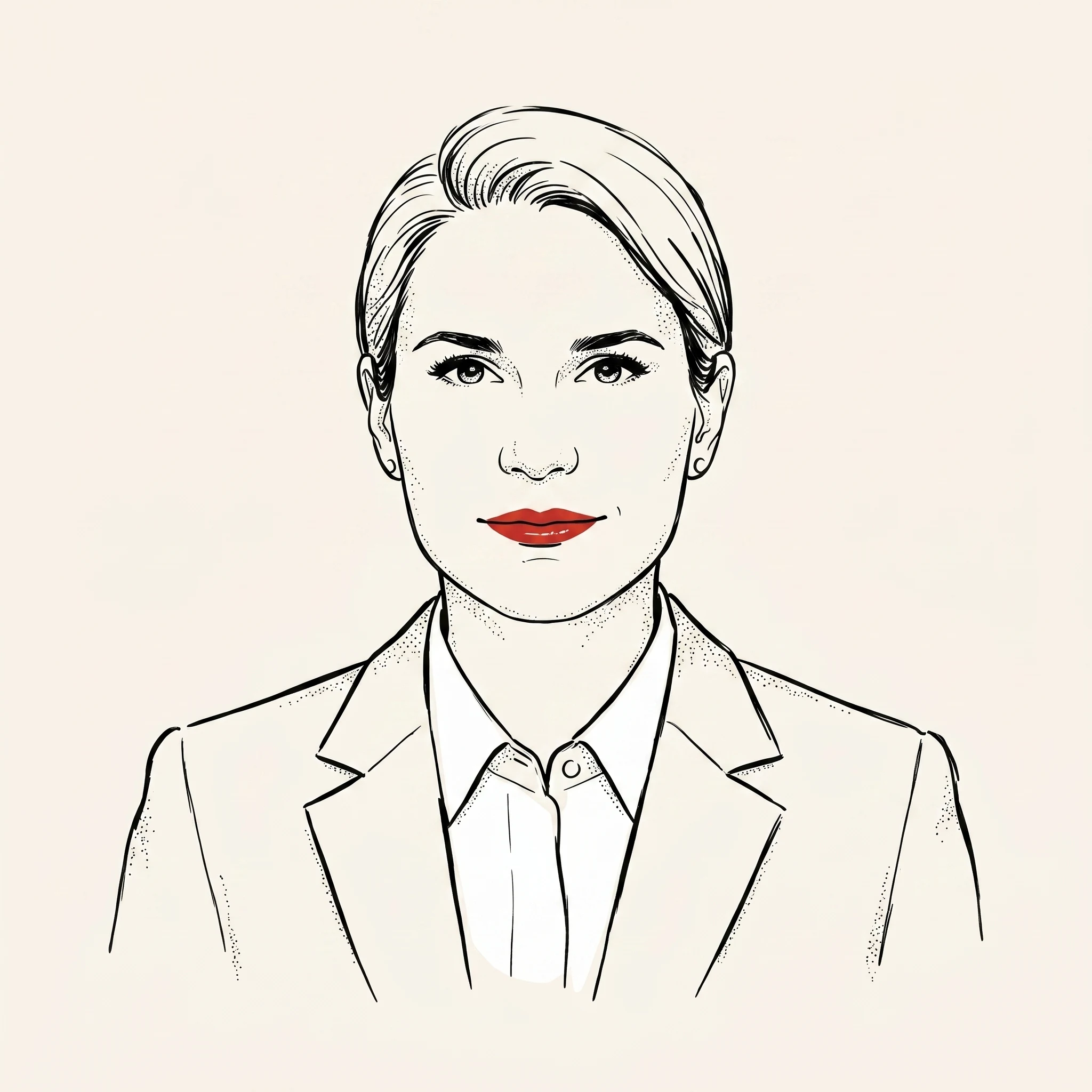
Nicole Bohne
Life and protection expert
Spent her career inside Basler Versicherung and Zurich Insurance before crossing to this side of the table. Nicole reads a life-cover decision against the whole household — who depends on whom, what already exists, and whether the answer is a policy at all.
Book with Nicole
Virginie Josten
IPMI expert
Came to insurance from luxury and consulting, where the clients were demanding and the work was international. Then a Swiss insurer’s international desk — cross-border employees, expats and retirees abroad. Legal training and a master’s from Paris Dauphine. English and French.
Book with Virginie
Davide Nezel
IPMI expert
FINMA-certified independent insurance intermediary, who began in financial advice at Swiss Life. He works with globally mobile households, and coordinates with the insurer when a medical need actually arises — which is where a policy is finally tested. German, French and English.
Book with Davide
Chantal Leprêtre
Client Advisor
Client advisor for international private medical insurance at SIP Medical Family Office, the partner through which international cover is placed. She works from London, in English and French.
Book with ChantalWhat companies actually ask us.
What do you actually do for a company?
We read what you already hold and write down what it does — what your people are covered for, where the wording is weak, and what is worth changing at the next renewal. Sometimes the answer is that the programme is fine and the money is better spent elsewhere. That answer is included in the price.
Is this only for large companies?
No, and the size that benefits most is smaller than people assume — a team of a dozen internationally mobile people has all the complexity of a large one and none of the in-house resource to handle it. What matters is whether your people cross borders, not how many of them there are.
How are you paid, and does that change what you recommend?
International cover is placed on a courtage basis: the insurer pays a percentage of the premium when a policy is placed. A higher premium can mean higher remuneration; this payment model does not remove that potential conflict. Our written report sets out the reasons for a recommendation, the alternatives considered and whether keeping existing cover is appropriate. There is no fee for the review or written report, whether or not you arrange cover through us.
Expat Savvy is an advisory practice and holds no insurance licences of its own. International cover is placed through SIP Medical Family Office. Availability depends on your residence, the product and the relevant SIP entity; we check the placement route before arranging cover. SIP Switzerland AG is registered with FINMA as a non-tied insurance intermediary under F01111824. That is SIP's registration, not Expat Savvy's.
Can you negotiate better terms with insurers?
Terms are where the value usually sits, and they are more negotiable than premiums. Movement between plans without fresh health questions, treatment of pre-existing conditions on joining, what happens when someone relocates mid-year. What we have secured, and with whom, we do not name here. A concession is only worth citing if it can be described in writing and checked against the wording, and a page like this one is where such claims go unchecked. Ask in the review and you get the specifics that apply to your headcount, in the report, where they can be held to.
What do we get at the end?
A written report, and the reasoning behind every recommendation in it. Not a quote sheet and not a presentation — a document that survives the meeting, that your finance team can check and that your people can be shown. It is yours either way.
Tell us the shape of it. We'll tell you if there's anything worth doing.
Not a quote request. Four facts is enough for us to say whether your headcount reaches a better underwriting basis, whether any of your countries need cover issued locally, and whether your renewal date leaves time to change anything. If the answer is that your programme is already well built, that is a short reply and it costs you nothing to have received it.
Where these facts come from.
A company will forward this page to a lawyer or a finance team, so it is worth being explicit about which claims here are load-bearing. The Swiss eight-hour rule is the Federal Office of Public Health's own, checked 2026-08-06. The cost table is an independent published benchmark, credited below. The underwriting-threshold figures are market guidance rather than any carrier's underwriting manual, and are written as such — we would confirm them for your actual headcount before you relied on one.
- Federal Office of Public Health (BAG) — compulsory accident insurance — PRIMARY, checked 2026-08-06. Confirms that every person employed in Switzerland is insured against occupational accidents under the UVG, and that non-occupational accident cover applies to those working at least eight hours a week for the same employer. The eight-hour line on this page is this source.
- Federal Act on Accident Insurance (UVG, SR 832.20), Art. 3 and Art. 91 — status 1 January 2026 — PRIMARY, read 2026-08-16. Art. 3 para 2: insurance ends on the 31st day after the day on which entitlement to at least half the salary ceases. Art. 3 para 3: the insurer must offer the option of extending cover by special agreement for up to six months. Art. 91: the employer bears the occupational-accident premiums and the employee the non-occupational ones, subject to agreements more favourable to the employee, with the employer owing the whole amount and deducting the employee’s share. An earlier version of this page said we had not read the Act and would not paraphrase it. We have now read it. Note the language: Fedlex publishes no English translation of the UVG, so the /en address serves the German text and we link the German directly rather than imply a translation exists.
- Ordinance on Accident Insurance (UVV, SR 832.202), Art. 13 — status 1 January 2026 — PRIMARY, read 2026-08-16. The eight-hour line in the law itself rather than in a summary of it: part-time employees whose weekly hours with one employer reach at least eight are also insured against non-occupational accidents; below that threshold, accidents on the way to work count as occupational accidents. That second sentence corrected this page, which had said such staff were simply not covered outside working hours. German only, as above.
- Cigna — Health Flex small-business brochure (document 2664) — PRIMARY for one narrow thing only, read 2026-08-16: that a company buying group cover chooses between four named underwriting bases — full medical underwriting, continued previous medical exclusions, moratorium, and medical history disregarded. The brochure attaches no headcount to any of them, which is why this page attaches none either. It is a 2021 document for a UK small-business plan, so we use it for the categories and for nothing else.
- SIP Health Cost Index 2025 — SIP Medical Family Office — PRIMARY. The per-country cost benchmark on this page. Averages for individual policies across seven international insurers; the index notes that corporate schemes differ but that it remains a good approximation of effective cost per country.
Ready for a calm conversation about cover?
A first review is free — 45 minutes, in English, wherever in the world you happen to be. We'll listen first. Then you'll hear exactly what we would arrange if the situation were ours. What you do with that is yours to decide.
Book a review