Moving to Switzerland: the three-month insurance rule.
Swiss basic health insurance is compulsory within three months of taking up residence, and backdated to that day if you join on time. Premiums are per person, set by age, canton and insurer, never by your income or your health.


In brief
How long do you have to get health insurance after moving to Switzerland?
Three months from taking up residence, and cover is backdated if you join on time.
- The clock starts when you register with your local residents’ office, not the day you land.
- Join late and cover starts only when you join, the canton can assign you an insurer, and a surcharge of 30 to 50 per cent runs for twice the delay.
- Per person: premiums vary by age, canton and insurer, not by income or health. Children need their own policy.
The three-month rule: backdated, and per person.
Three facts that between them decide your first ninety days and your household budget for every year after.
Three months, and it is not a grace period
You have three months from taking up residence to take out compulsory cover. It is not optional and there is no version of legal residence without it.
Backdated to the day you take up residence
Cover starts from the day you take up residence — the date you register with your local residents' office — regardless of when you sign, so the premiums accrue from that date. Waiting does not save you money; it only removes your choice.
And the premium ignores what you earn
Premiums are per person and vary by age, canton and insurer — not by income and not by your medical history. Everyone in the household needs their own policy, children included.
None of which is a reason to delay. Because cover is backdated, waiting costs you the choices and not the premiums — which is the opposite of how deadlines usually work.
Your first ninety days in Switzerland: what to do, by when.
Join on time and cover is backdated to the day you take up residence; join late and it is not — the late months are a real gap, and the surcharge is 30 to 50 per cent of the premium for twice the length of the delay. Read from the KVG and the KVV themselves, 2026-08-16.
| When | What it involves |
|---|---|
| Before you arrive | Know the shape: cover is per person, priced by age, insurer and premium REGION (federally defined — your address matters, not just your canton), and it ignores your income and your health entirely. Nothing you hold from home substitutes unless you fall outside the duty or hold an exemption. |
| Day 0the clock starts | The three months run from the day you take up residence, which the ordinance ties to registering with your local residents' office rather than to the date on your boarding pass. Join within them and cover is backdated to that day — you were insured all along, and owe the premiums to match. Join LATE and it is not: cover then starts only when you sign, the interim months were a genuine gap and are not reimbursed, and a surcharge follows. |
| Weeks 1–8the three real decisions | Insurer (service and processing differ; premiums for identical cover differ), franchise, and model (standard, family-doctor, telmed…). The franchise is a set of fixed rungs, not a sliding scale: adults CHF 300 as standard, then 500, 1,000, 1,500, 2,000 or 2,500; children none by default, with optional levels of 100, 200, 300, 400, 500 and 600. Not every insurer offers every rung. These three ARE the Swiss insurance decision; everything else is detail. |
| Check earlyare you exempt? | Two different doors, and the difference matters. Some people are not subject to the duty at all — where an international agreement puts you under another country's social security law, that exclusion is automatic and nothing is applied for. The rest are exemptions granted on request through the cantonal authority, where the test is equivalent cover for treatment in Switzerland, confirmed in writing by the foreign insurer. If either might describe you, settle it BEFORE buying anything. |
| Day 90the door closes | Miss the deadline and the consequences are these, exhaustively: cover starts from the day you join rather than from residence, care already paid for in the gap is not reimbursed, the canton can assign you an insurer, and a surcharge of 30 to 50 per cent of the premium is levied for twice the length of the delay, up to five years. An earlier version of this page also said late joiners lose the choice of franchise and model. That was wrong and we have removed it — no such penalty exists. What does exist is a rule that catches punctual and late joiners alike: moving to a HIGHER franchise is only possible from the start of a calendar year. |
| Every Novemberthe annual reset | Premiums change each year and switching windows open. That is a resident's decision, not an arrival's — and it is exactly where our Swiss practice, expat-savvy.ch, goes deeper than this page ever will. |
This page is the first ninety days.
Switzerland is where this practice actually comes from. expat-savvy.ch is our Swiss business and has been for years, and it goes considerably deeper on funds, franchises, cantonal premiums and switching than a page written for newcomers should.
So this page has a narrow job: get somebody who has just landed through the first ninety days without losing a decision by default. What to do, by when, and what happens if you do not.
The comparison work — which fund, which franchise, which model, whether to switch in November — is a different question asked by somebody who already lives here. That is on .ch, in more detail and in the languages the Swiss market actually uses.
We would rather send you there than reproduce it badly. If you are already resident and reading this page, you are on the wrong one of our two sites, and the better one is a click away.
| Decision | What it is | The lever it pulls |
|---|---|---|
| The insurer | Same compulsory benefits everywhere; no fund may refuse you basic cover within its operating area (KVAG Art. 5 lit. i) | Price, service language, processing speed — premiums differ for identical cover |
| The franchise | Fixed rungs, not a range: adults CHF 300 standard, then 500, 1,000, 1,500, 2,000, 2,500; children none by default, optional 100, 200, 300, 400, 500, 600 (KVV Arts. 93, 103) | High franchise = lower premium; not every insurer offers every rung, and raising one takes effect only from January |
| The co-payment | 10% retention after the franchise, capped CHF 700/yr for adults and CHF 350 for children; CHF 15/day in hospital, and none for children or young adults in education (KVV Arts. 103–104) | The part no dial removes — budget it, do not insure it away |
| The model | Standard, family-doctor (HMO), telmed | Discounts for accepting a gatekeeper you might prefer anyway |
| Accident cover | Included in compulsory cover by default; suspendable on request while you are covered through work at 8h+/week for the same employer (KVG Art. 8; UVV Art. 13) | The trap runs backwards — the suspension has to be lifted when the job ends |
| Supplementary (VVG) | Optional private layer — dental, private ward, abroad | Health-questioned, unlike basic cover: apply while healthy |
The compulsory benefits are identical everywhere by law — which is why the whole game is these six rows, and why comparing "coverage" between Swiss insurers is mostly a category error.
Four situations, four different checks.
The arriving employee
Your employer handles nothing here — Swiss cover is personal, not occupational. The one employment interaction that matters runs the opposite way to the folklore: accidents are already in your compulsory policy, and working eight hours a week or more lets you ask for that part to be suspended. Remember to reverse it when the job ends.
The family
Per-person pricing means four policies for four people, children included. The family premium is the number to plan around, and a single adult's quote tells you almost nothing about it. Children carry no franchise unless you choose one, and their retention cap is half an adult's.
The student
A temporary student with equivalent cover for treatment in Switzerland can be exempted — but it is applied for through the canton, and the evidence is written confirmation from your existing insurer, not a card. The worst outcome is paying Swiss premiums you never owed.
The posted worker
On an EU or EFTA posting, home social security can keep covering you for 24 months — and that period is extendable by agreement between the two states, in practice to five or six years. From outside the EU and EFTA there is no common figure at all: each bilateral treaty sets its own. Establish yours in writing before the move.
Mid-table, which surprises almost everyone.
Switzerland ranks fifteenth of fifty — cheaper on a comparable international plan than Greece, Spain, Thailand, Mexico and Brazil. The structural reason is that Swiss private cover is not carrying the whole load: it sits on top of a compulsory basic system that already buys good care. In Thailand or Mexico the private policy is the healthcare. Here it is the top layer, and the price says so.
One thing the index is not, and its authors say so twice: it does not compare the seven insurers against one another. Where two of them price the same country differently, that reflects different benefits, cover areas and networks — not one being better value. And none of these figures is a quote. They are averages for three people who do not exist, and what you would actually pay turns on your age, your health, your family and where you want to be treated.
Dearer than Switzerland on this measure: Bahrain and Spain. Cheaper: Australia and Chile.
Source: SIP Health Cost Index 2025, SIP Medical Family Office. Data as at August 2025, published 1 December 2025. Figures rounded to the dollar. Comparisons and any tax-adjusted figures in the text above are our own arithmetic on SIP's published numbers, not SIP findings.
Three standard profiles
- At 24 · Indian national, born 2001
- $6,392
- At 35 · British national, born 1990
- $8,017
- At 50 · American national, born 1975
- $12,328
- Average across seven international insurers
- $8,912
Of 50 countries15th.
Three ways this goes wrong, and all three are avoidable.
Treating three months as thinking time
Because cover is backdated for anyone who joins on time, the deadline is not a runway. Miss it and the canton can assign you an insurer, cover starts only from the day you join, and a surcharge of 30 to 50 per cent of the premium runs for twice the length of the delay — capped at five years.
Budgeting per household instead of per person
The per-capita principle catches families hardest. Four people means four premiums, and a figure quoted for one adult tells you almost nothing about what a family will actually pay.
Assuming your international policy will do
Compulsory Swiss cover is a specific product from a recognised insurer. Some people are outside the duty automatically because another country's social security law applies to them; others have to apply for an exemption and show equivalent cover. Establish which of the two describes you rather than assuming your existing plan counts.
Any of these sound like your situation? See how a review works
What a first review actually looks like.
Arranging international cover for the first time, or checking what you already hold — the process is the same, in this order.
The demand intake
Right after you book, we email you a short intake form. Where you are, where you're going, who's coming with you, anything you already hold. It takes a few minutes, and it means the 45 minutes start prepared — with your situation, not with paperwork.
We study your situation
Not products first. Your life first. We look at the country you're moving to and what it legally requires, the country after that if there is one, who depends on you, and where the real exposure sits. We don't quote anything at this stage.
The consultation
45 minutes, by video, in English. We work through the questions that matter in your situation: underwriting, renewal, exclusions and treatment geography. If you already hold cover, we read its wording and personal endorsements. We identify what is clear and what still needs the insurer's written confirmation.
Your Private Client Report
One working day later, your Private Client Report arrives — around twelve pages setting out what we found, the alternatives considered, available cost information, and the reasons for our recommendation. Any missing documents or insurer answers are identified as open questions. What to arrange, what to keep, and where you are paying for something that isn't doing any work. Sometimes the report says: keep what you have. It is yours either way.
45 minutes. By video, wherever you are. Free. Nothing has to change afterwards.
The people who'll actually review your situation.
Specialists by topic, not a rota. You'll know who you're speaking to before you book, and you'll speak to the same person again next year.

Robert Kolar
Health insurance expert
Twenty-plus years spent on the distance between what a health policy promises and what it pays when a claim actually lands. German and English. He has been the foreigner working out somebody else's health system from the outside, which is its own kind of qualification.
Book with Robert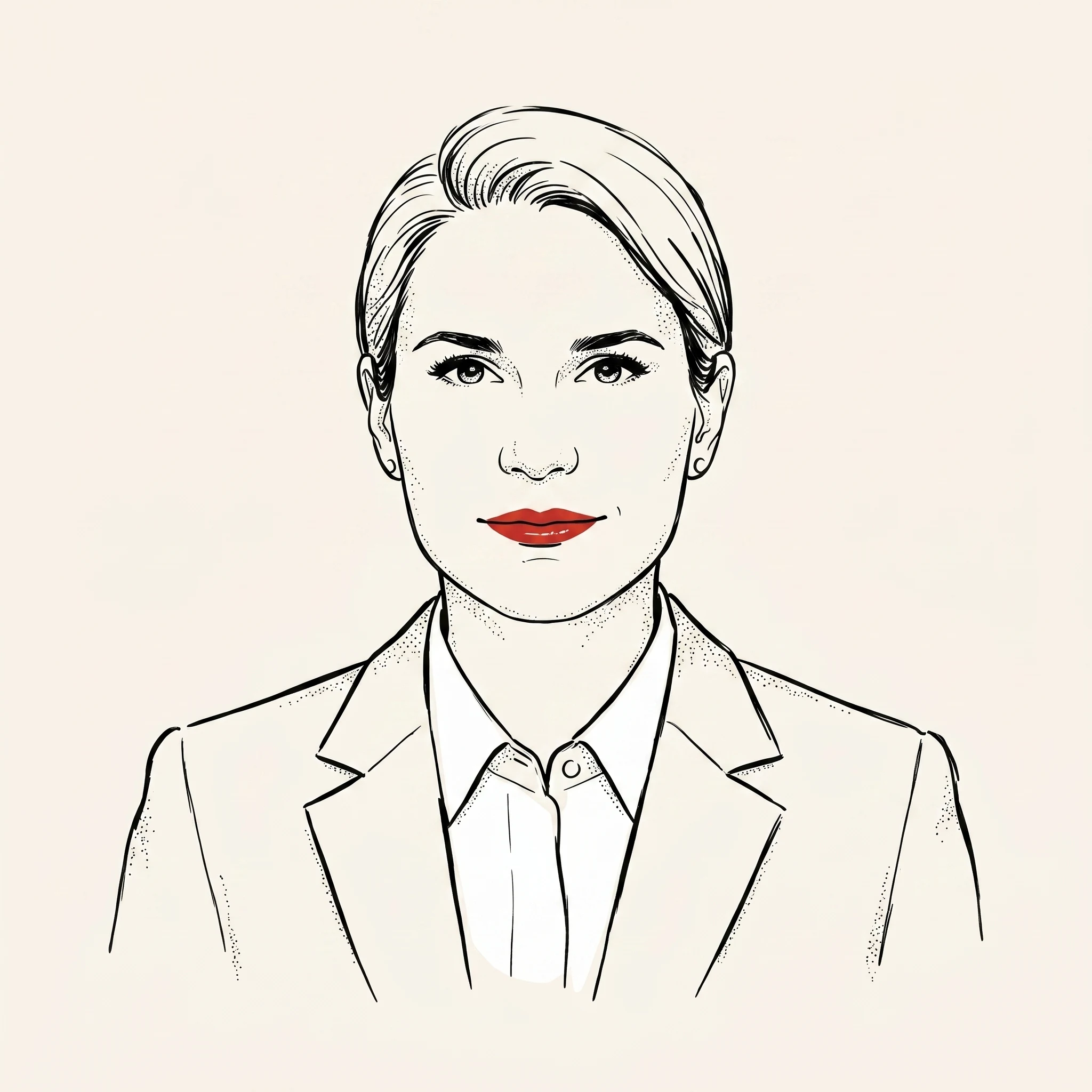
Nicole Bohne
Life and protection expert
Spent her career inside Basler Versicherung and Zurich Insurance before crossing to this side of the table. Nicole reads a life-cover decision against the whole household — who depends on whom, what already exists, and whether the answer is a policy at all.
Book with Nicole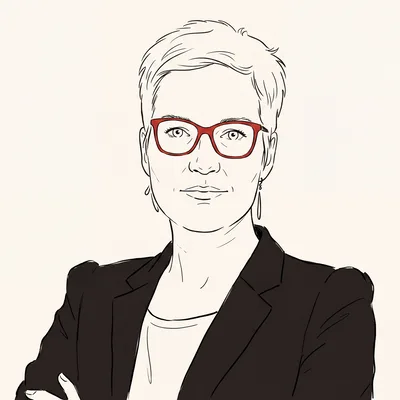
Virginie Josten
IPMI expert
Came to insurance from luxury and consulting, where the clients were demanding and the work was international. Then a Swiss insurer’s international desk — cross-border employees, expats and retirees abroad. Legal training and a master’s from Paris Dauphine. English and French.
Book with Virginie
Davide Nezel
IPMI expert
FINMA-certified independent insurance intermediary, who began in financial advice at Swiss Life. He works with globally mobile households, and coordinates with the insurer when a medical need actually arises — which is where a policy is finally tested. German, French and English.
Book with Davide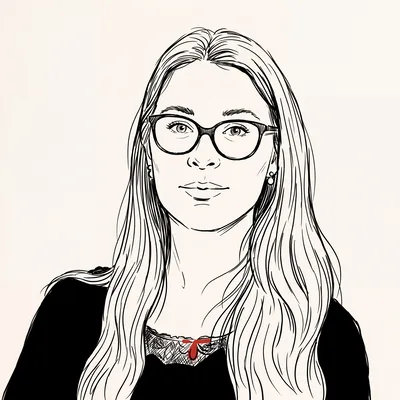
Chantal Leprêtre
Client Advisor
Client advisor for international private medical insurance at SIP Medical Family Office, the partner through which international cover is placed. She works from London, in English and French.
Book with ChantalSwiss health insurance for new arrivals: your questions.
What is a franchise, and which should I pick?
The franchise is your annual deductible, and it is the main dial on your premium: higher franchise, lower premium, more risk held yourself. It is not a range but a set of fixed rungs. For adults the ordinary franchise is CHF 300, and the selectable levels are CHF 500, 1,000, 1,500, 2,000 and 2,500. For children there is no franchise at all by default, with optional levels of CHF 100, 200, 300, 400, 500 and 600 — the part of the system almost no English-language summary mentions. Insurers are not obliged to offer every level. The honest rule: pick against the care you actually expect to use, not against optimism. The arithmetic per canton lives on our Swiss site.
Can I be exempt from Swiss health insurance if I am insured at home?
Usually not, and the question has two different answers depending on which door you are at. Some people are simply not subject to the duty — where an international agreement puts you under another country's social security law, posted workers among them, nothing has to be applied for. Everyone else has to request an exemption formally, and the test there is equivalent cover for treatment in Switzerland, evidenced in writing by the foreign insurer. We previously described this as an EU-versus-non-EU split turning on the European health insurance card; that split does not appear in the regulation and we have removed it. Establish which door is yours before buying anything.
Does my employer arrange my Swiss health insurance?
No — and this catches people from employer-based systems. Swiss compulsory cover is personal: you choose the insurer, franchise and model yourself, per family member. Accident cover is the one place employment touches it, and it works the opposite way to what most people assume. Accidents are covered by your compulsory policy by default; if you work at least eight hours a week for the same employer, you are covered for non-occupational accidents through work and can ask your insurer to suspend that part of the policy and pay less. The trap is at the other end — when the job stops, the suspension has to be lifted.
How long do I have to arrange Swiss health insurance?
Three months from taking up residence — the date you register with your local residents' office, which for somebody who arrives weeks before registering is not the day they landed. Join inside the window and cover is backdated to that date, so delay costs you the choices rather than the premiums. Join late and it is not: cover starts only when you join, the months in between are not reimbursed, the canton can assign you an insurer, and a surcharge of 30 to 50 per cent of the premium runs for twice the length of the delay, up to five years.
Do Swiss health insurance premiums depend on income?
No, and this surprises almost everyone. Swiss compulsory premiums are per person and vary by age, canton and insurer, not by earnings and not by medical history. There is no health questionnaire and no waiting period for compulsory cover. It is one of the very few systems in the world that prices this way.
Do my children need their own policies?
Yes — the per-capita principle means each family member is separately insured, children included. Which is why a premium quoted for a single adult is a poor guide to what a family will pay.
Our baby is due in Switzerland. What do we have to do?
The same three months, running from the birth. Enrol inside it and the child is covered from the moment of birth, with premiums charged pro rata to the day rather than for the whole month. Enrol late and the parents owe the surcharge on the child's behalf. Two things soften the cost: children carry no franchise unless you choose one, and their annual retention is capped at CHF 350 rather than CHF 700. Worth arranging before the birth rather than in the fortnight after it.
Can I keep my international health insurance instead of Swiss cover?
Usually not. Compulsory cover has to come from a recognised Swiss insurer, and every such insurer must accept you for basic cover within the area it operates in — which is the protection that makes the system work. An international policy can sit on top as a supplementary layer, but it does not discharge the duty. Check whether you fall under an exemption before assuming your existing plan is enough.
Where can I compare Swiss funds and franchises properly?
On expat-savvy.ch, which is our Swiss practice and goes far deeper on funds, franchises and cantonal premiums than this page should. This page is for the first ninety days after you land; that one is for living there.
How much does international health insurance cost in Switzerland?
Comparable international private medical insurance in Switzerland costs about $8,912 a year on average, which ranks Switzerland 15th of the 50 countries in the SIP Health Cost Index 2025 (data as at August 2025). That is an average across 7 international insurers and three standard profiles — a 24-year-old, a 35-year-old and a 50-year-old — so it describes what the country costs rather than what you would pay. Spain prices higher and Australia lower. Your own premium depends on your age, your health history, whether you are insuring a family, your deductible, and whether you need cover in the United States.
Does health insurance in Switzerland get more expensive as you get older?
It rises steeply. In Switzerland the SIP Health Cost Index 2025 quotes about $8,017 a year for its 35-year-old profile and about $12,328 for its 50-year-old profile — roughly 1.54 times as much, one of the steeper spreads among the fifty countries measured. That comparison is our own arithmetic on the index's published figures, and the two profiles differ in sex and nationality as well as age, so it is not a pure age effect. It is still the direction a policy bought young will travel, which is why the premium a plan charges today matters less than what it will charge when you are least able to change it.
Where these facts come from.
This is the one page where we cite ourselves: expat-savvy.ch is our Swiss practice, and the resident-level depth — funds, franchises, the November switch — lives there in the languages the Swiss market uses.
Everything else here comes from the federal text itself. Reading it changed four things we had previously published: the backdating date is the day you take up residence rather than the day you land, the franchise is a set of fixed rungs rather than a range, children have a franchise ladder and a lower retention cap we had never mentioned, and accident cover is included by default rather than something non-workers must add. Two claims came off the page altogether — that late joiners lose the choice of franchise and model, and that the exemption test turns on the European health insurance card. Neither appears in the law.
- KVG — Federal Act on Health Insurance, SR 832.10 (Fedlex, Stand 1 July 2026) — PRIMARY — read 2026-08-16: Art. 3 the three-month duty; Art. 4 choice of a recognised Swiss insurer; Art. 5 cover from taking up residence and the parents' liability for a late-enrolled child; Art. 6 cantonal assignment; Art. 8 suspension of accident cover; Art. 61 per-capita premiums; Art. 61a separate premiums per family member; Art. 64 no franchise for children
- KVV — Health Insurance Ordinance, SR 832.102 (Fedlex, Stand 1 August 2026) — PRIMARY — read 2026-08-16: Art. 2 the automatic exclusions and the exemptions granted on request; Art. 7 residence dated from the residents' office and cover from joining if late; Art. 8 the surcharge of 30–50% for twice the delay, capped at five years; Art. 93 the franchise rungs; Art. 94 a higher franchise only from January; Arts. 103–104 the 10% retention, the CHF 700 and CHF 350 caps and the CHF 15 daily hospital contribution
- KVAG — Health Insurance Supervision Act, SR 832.12 (Fedlex, Stand 1 July 2026) — PRIMARY — read 2026-08-16: Art. 5 lit. i, the duty to accept every applicant for compulsory cover within the insurer's operating area
- UVV — Accident Insurance Ordinance, SR 832.202 (Fedlex, Stand 1 January 2026) — PRIMARY — read 2026-08-16: Art. 13, the eight-hour threshold, which governs non-occupational accidents only
- BAG/FOPH — The compulsory health insurance system (official guide and consumer FAQ) — PRIMARY — no health questionnaire and no waiting period for compulsory cover; premiums pro-rated to the day for a newborn
- BSV — Soziale Sicherheit für Entsandte, Schweiz–EU (January 2024) — PRIMARY — the 24-month posting period under Reg. 883/2004 Art. 12 and its extension by agreement under Art. 16
- Gemeinsame Einrichtung KVG — corroborating, consulted 2026-08-16: the three-month rule and the position of late joiners
- expat-savvy.ch — our Swiss practice — the deeper resident-level guidance: funds, franchises, switching
Reading on this country.
- Facts checked 2026-08-16Insuring a team in Switzerland: the eight-hour accident lineIn Switzerland the employer owes accident cover, not health insurance — and only staff working eight-plus hours a week are covered off the clock by UVG.
- Facts checked 2026-08-16Dubai to Switzerland: cheaper cover, nothing that transfersThe UAE mandate is employer-linked and ends with the permit. Switzerland compels the individual to hold KVG cover three months from taking up residence.
- Facts checked 2026-08-16The franchise decision, explained for your arrival yearSwiss basic insurance leaves one pricing lever: the franchise, on fixed rungs from 300 to 2,500 francs. The arithmetic, and why arrival year is hardest.
- Facts checked 2026-08-16Your first ninety days in Switzerland, datedSwitzerland gives you three months to take out KVG basic insurance, backdated to the day you register your residence — but only if you are on time. Dated.
- Facts checked 2026-08-16What deregistering from Switzerland actually endsSwiss basic insurance attaches to residence, so an Abmeldung ends it. Coming back is treated as an arrival: the three-month enrolment deadline runs again.
Ready for a calm conversation about cover?
A first review is free — 45 minutes, in English, wherever in the world you happen to be. We'll listen first. Then you'll hear exactly what we would arrange if the situation were ours. What you do with that is yours to decide.
Book a review